
Is ceramic fiber board used as insulation material? In most industrial furnace systems, ceramic fiber boards are widely used for insulation in the hot-face zone. However, the true measure of their reliability is not merely the labeled temperature rating—it’s more important whether the material can maintain structural integrity under continuous high-temperature operation without collapsing, shrinking, or experiencing edge cracking. This is exactly where the value of our company's refractory ceramic fiber boards truly stands out.
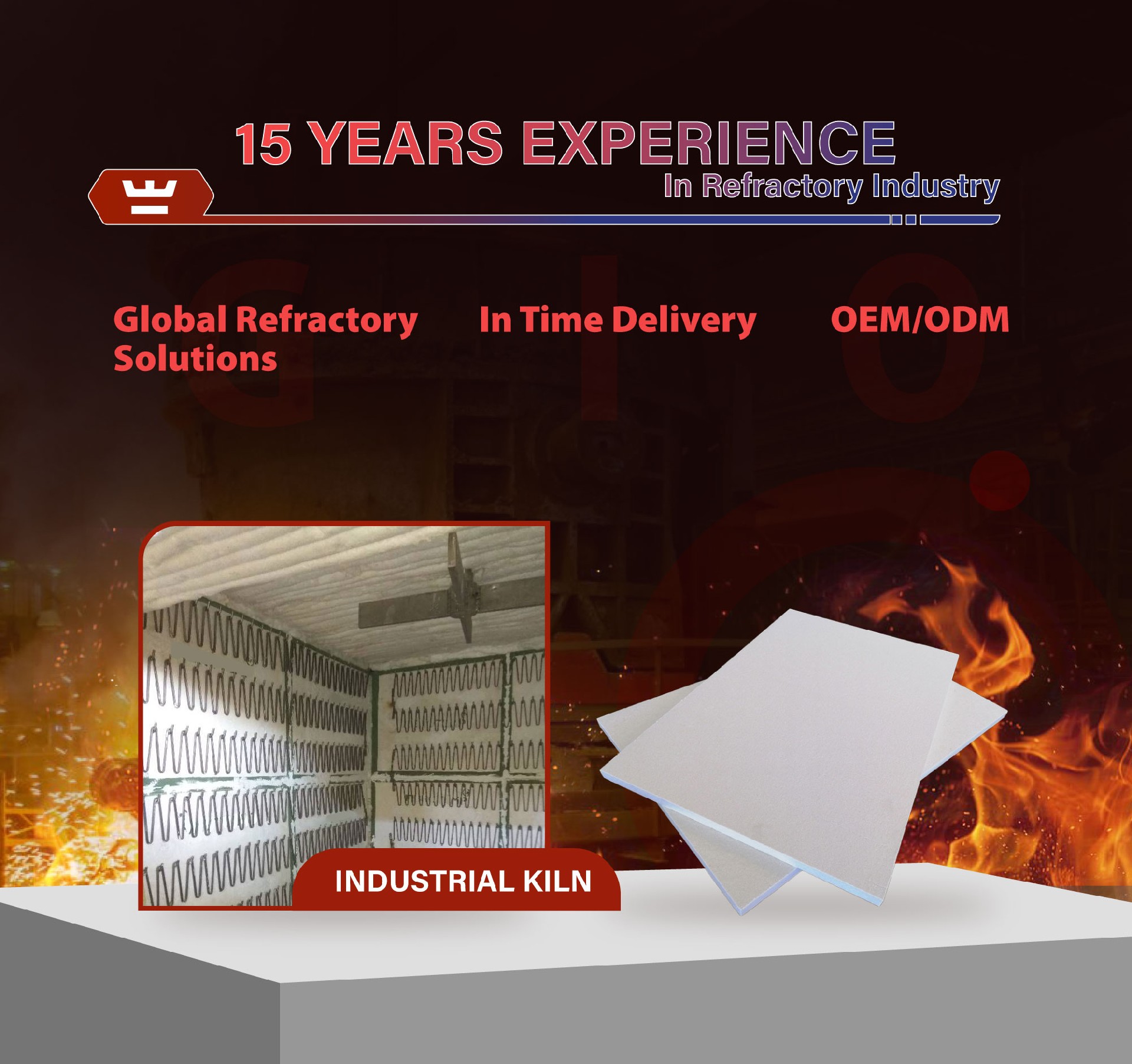
Ceramic Fiber Board – Long Keter
Our ceramic fiber boards achieve exceptional thermal performance through three key process controls:
·High Alumina Content: Enhances skeletal strength at high temperatures.
·Fully Automated Press Molding: Ensures uniform fiber distribution and consistent board density, minimizing internal stress concentration and structural fatigue.
·Two-Hour Deep Drying Process: Guarantees uniform moisture removal, reducing the risk of post-drying cracking and delamination.
As a result, our ceramic fiber boards exhibit a shrinkage rate of less than 2.6% within the operating temperature range of 3–1100°C (1430–2012°F). This means that even after months of continuous operation, the boards can maintain their original thickness and fit—ensuring the insulation layer does not collapse, detach, or form thermal bridges.
In a recent upgrade of metal heat treatment equipment, a customer reported that the original ceramic fiber board installed on the furnace roof began to crack and sag after only three months of continuous use, leading to increased shell temperature, energy loss, and frequent maintenance shutdowns.
After replacing it with our high-temperature insulation boards, the system operated continuously for six months with no structural issues. The furnace shell temperature dropped by approximately 25°C, thermal efficiency improved by nearly 12%, and the maintenance cycle extended from monthly to quarterly, significantly reducing operational costs.
So, yes, ceramic fiber is indeed used as insulation material. But truly reliable ceramic fiber boards must be validated through long-term performance in high-temperature systems.

At our company, we don’t just provide “high-temperature resistant” ceramic fiber boards—we offer ceramic fiber solutions designed for structural and thermal stability under real-world conditions.


Get Price
Email:

Please feel free to submit your inquiry using the form provided below, and we will provide you with a quote within 24 hours.


