Have you ever wondered how a lightweight blanket can withstand extreme high temperatures?
A white blanket that looks as light and fluffy as cotton can steadily perform insulation functions in extreme high-temperature environments of thousands of degrees Celsius — recently, the ceramic fiber blanket launched by Zibo Longketer New Materials Co., LTD has become a focal product in the industrial thermal management sector, thanks to its dual characteristics of “lightweight + high-temperature resistance”.
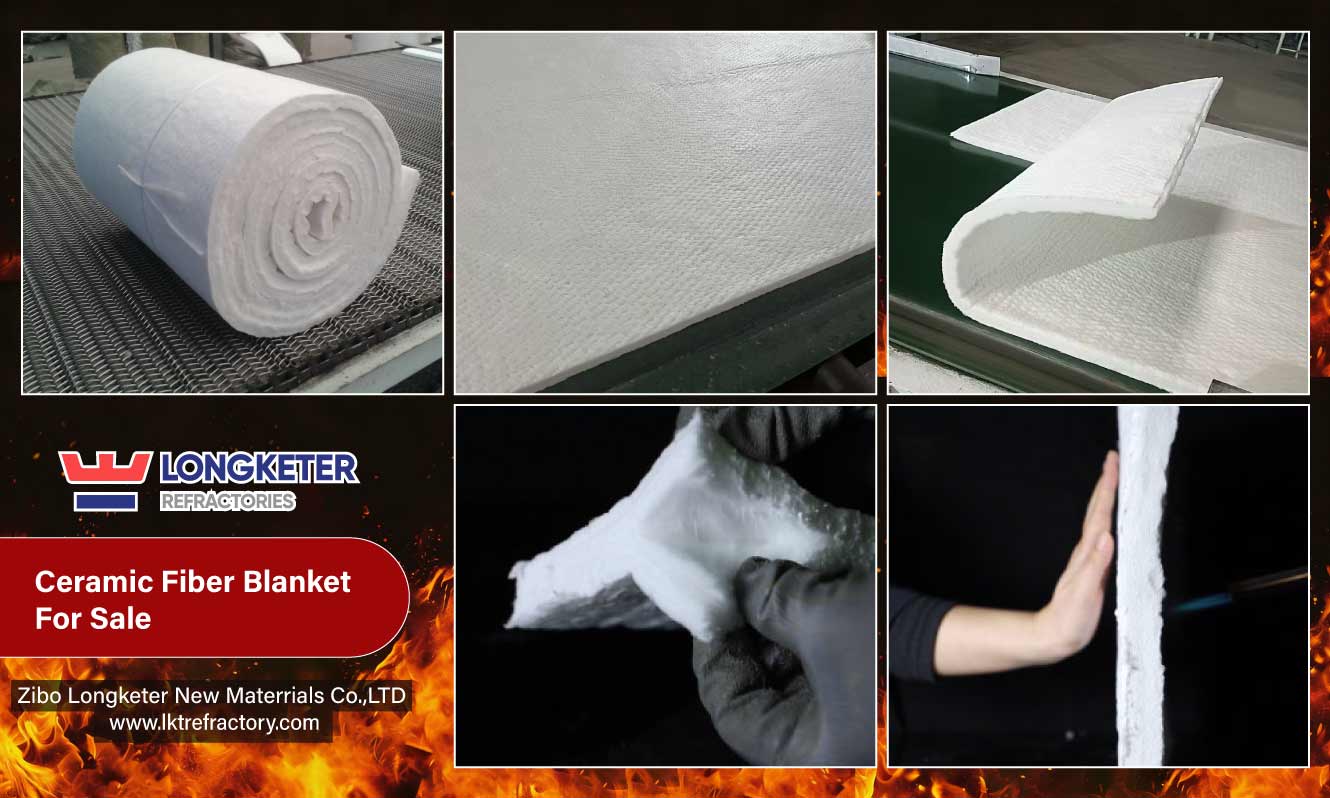
·From the product photos, this ceramic fiber blanket comes in the form of a fluffy white roll. It is soft and bendable, and can even be cut by hand. However, its core performance directly addresses the high-temperature pain points in industrial scenarios: traditional insulation materials are often bulky and cumbersome to install, while this product achieves high-efficiency thermal resistance in a lightweight form, breaking the industry’s inertial perception that “high-temperature resistance must come with heaviness”.
·Its high-temperature resistance stems from the precise blocking of the three modes of heat transfer. In terms of thermal conduction, the disordered interwoven structure of ceramic fibers lengthens the heat transfer path. At the same time, the porosity of up to 93% and the point-contact design between fibers significantly increase thermal resistance, reducing heat conduction through solid media. For thermal convection, the microscopic pores inside the material form a large number of static gas units. These “micro air chambers” constitute a dense gas-fiber composite barrier, restricting convective heat loss caused by air flow. In the aspect of thermal radiation, the white smooth surface of ceramic fibers can effectively reflect thermal radiation in high-temperature environments, further reducing heat dissipation. The synergy of these three mechanisms allows this “light blanket” to withstand extreme high temperatures.
·This feature makes it widely applicable in industrial scenarios: as a furnace lining material, it can provide stable insulation for high-temperature furnaces in industries such as metallurgy and chemical engineering, reducing energy consumption; when used for high-temperature pipeline wrapping, it can reduce heat loss in pipelines while avoiding the construction burden caused by traditional heavy materials; in addition, in scenarios such as local insulation of industrial equipment and high-temperature operation protection, its advantages of being lightweight and easy to install are also prominent.
Currently, the global industrial sector is accelerating its transformation towards energy conservation and cost reduction, and “high efficiency + lightweight” has become the core demand for thermal management materials. The launch of Longketer’s ceramic fiber blanket aligns perfectly with this trend — according to preliminary industry estimates, equipment using this material can see a heat loss rate reduction of about 20%, while installation efficiency is increased by more than 30% compared with traditional materials, balancing energy-saving benefits and construction convenience.