
In the heart of every high-temperature industrial process—from cement kilns and steel furnaces to glass melters and chemical reactors—lies an unspoken hero. While flames roar and temperatures soar beyond 1300°C, a critical barrier stands between productivity and peril: the ceramic fiber module. More than just insulation, these modules serve as the essential thermal boundary guardians of modern industry, controlling heat flow, enhancing safety, and driving operational efficiency.
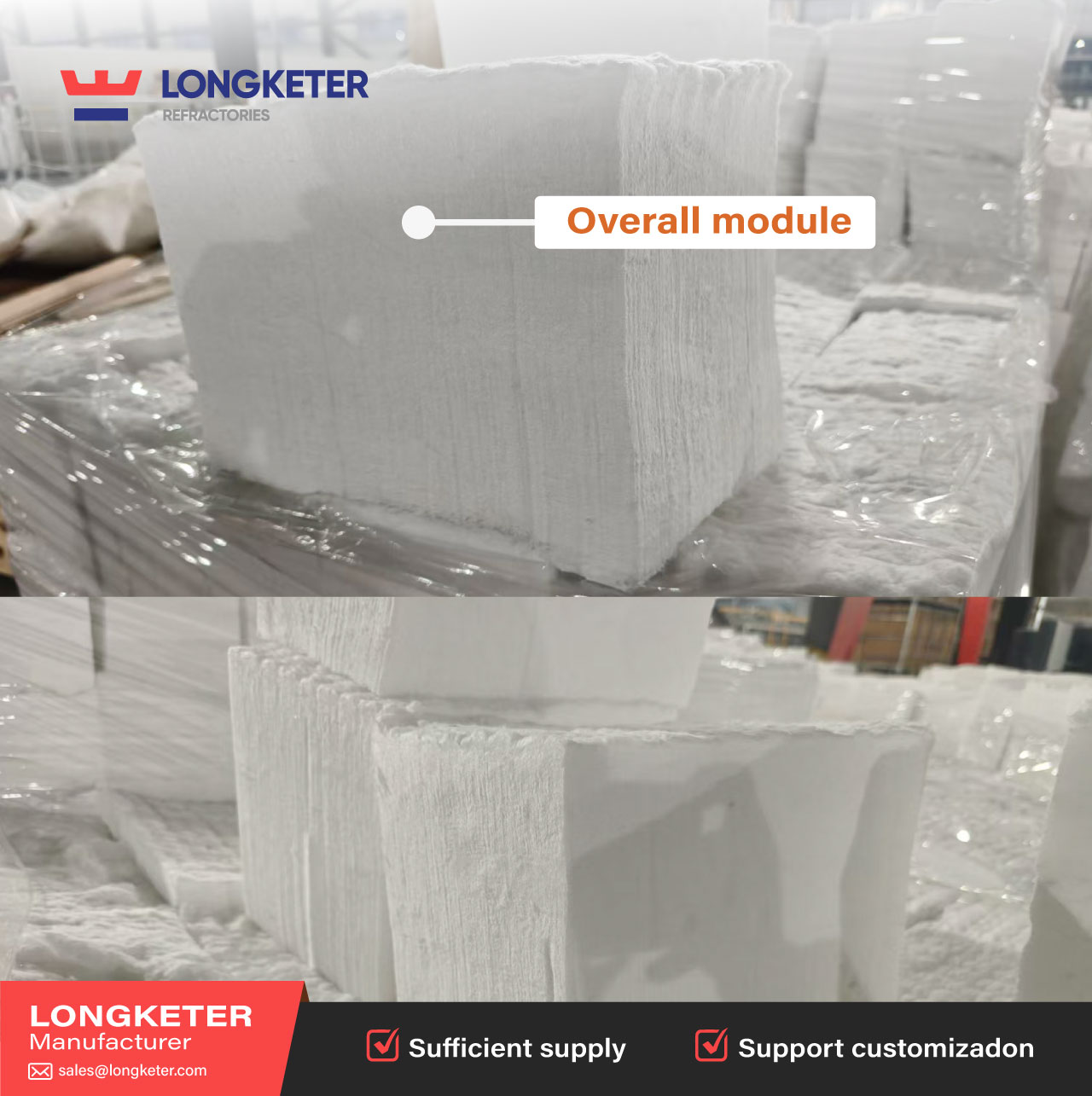
What Are Ceramic Fiber Modules?
Ceramic fiber modules are pre-compressed, lightweight refractory units made from high-purity alumina-silicate materials. They are designed to be installed in industrial kilns, furnaces, and high-temperature equipment linings. Despite their soft, almost cotton-like appearance, these modules are engineered to withstand continuous temperatures ranging from 1800°F to 2400°F (982°C to 1315°C), making them ideal for extreme thermal environments.
Industries such as cement, steel, glass, and chemicals rely on consistent, high-temperature operations. Any failure in thermal management can lead to energy waste, equipment damage, safety hazards, and costly downtime. Ceramic fiber modules play a silent yet vital role by:
Containing heat within the process zone
Protecting structural components from thermal stress
Reducing external shell temperatures to safe levels
Minimizing heat loss and improving energy efficiency
Without these modules, the longevity of industrial furnaces and kilns would be compromised, and energy consumption would skyrocket.
Specially formulated to perform reliably in temperatures up to 2400°F, ceramic fiber modules maintain their structural integrity and insulating properties under prolonged thermal exposure. This makes them suitable for the most demanding applications, including metal processing, petrochemical refining, and ceramic manufacturing.
Factory-precompressed for easy handling and shipping, these modules expand on-site when exposed to heat, filling every gap and creating a tight, continuous lining. This expansion feature ensures no thermal leakage, no weak points, and a perfect fit even in complex geometries.
Equipped with durable metal anchors and a twist-lock design, the modules resist loosening or displacement caused by thermal cycling, vibration, or mechanical stress. This secure installation translates to longer service life and reduced maintenance.
By effectively shielding the outer shell, ceramic fiber modules keep external temperatures safe for personnel and nearby equipment. This leads to:
Lower energy consumption – reducing operational costs
Extended equipment lifespan – protecting capital investment
Improved workplace safety – minimizing burn risks and heat exposure
Cement Industry: Kiln linings, preheater zones, and cooler sections
Steel Production: Furnace linings, ladle covers, and thermal shields
Glass Manufacturing: Melter walls, forehearths, and annealing lehrs
Chemical Processing: Reformers, crackers, and high-temperature reactors
Ceramics & Refractories: Kiln car tops, burner blocks, and back-up insulation
Every module represents a chain of precision engineering and reliable logistics:
Raw Material Selection: High-purity refractory minerals are processed into fine fibers.
Forming & Compression: Fibers are needled, layered, and pre-compressed into modular units.
Quality Testing: Each batch is tested for thermal conductivity, density, and stability.
Packaging & Logistics: Modules are packed to withstand international shipping.
On-Site Installation: Trained technicians install modules using specialized anchoring systems.
This end-to-end control ensures consistency, performance, and durability in every shipment.
At LONGKETER, we specialize in manufacturing high-performance ceramic fiber modules tailored to extreme industrial environments. Our products are trusted by global clients in cement, steel, glass, and chemical sectors for their:
Proven thermal performance
Customizable designs and sizes
Responsive supply chain and consistent availability
Expert technical support and installation guidance
We don’t just sell refractory products—we deliver thermal solutions that enhance safety, efficiency, and sustainability.
In the world of high-temperature manufacturing, what you don’t see is often what protects you the most. Ceramic fiber modules may operate behind the scenes, but their role is front and center in ensuring operational continuity, energy savings, and workplace safety. As industries worldwide push toward higher efficiency and greener operations, the demand for reliable, high-performance insulation will only grow.
Whether you’re designing a new kiln, retrofitting an old furnace, or optimizing thermal management in your plant, consider the silent guardian that stands between heat and hazard.


Get Price
Email:


Please feel free to submit your inquiry using the form provided below, and we will provide you with a quote within 24 hours.


