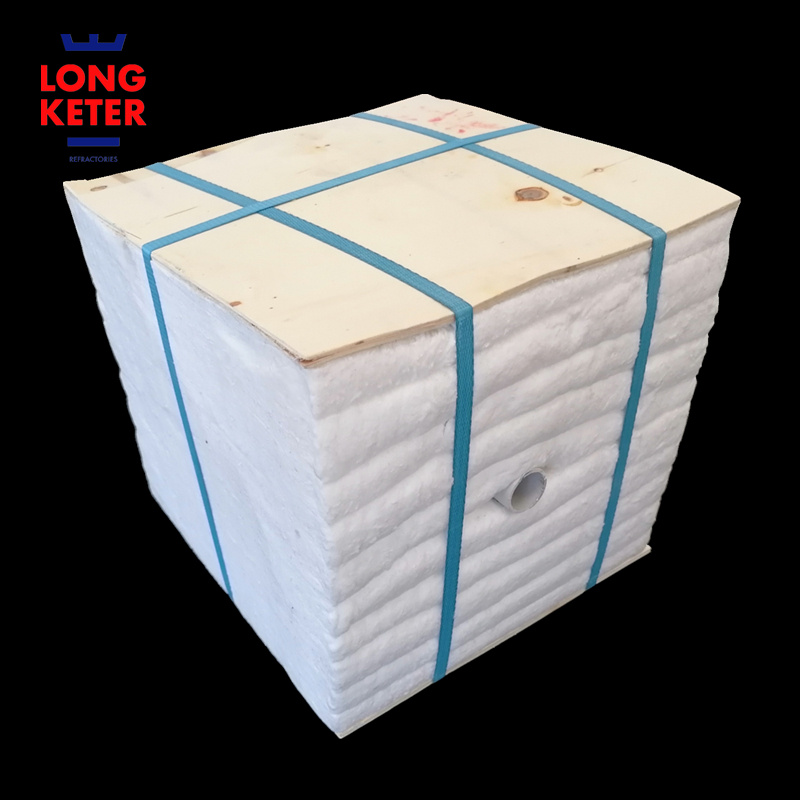
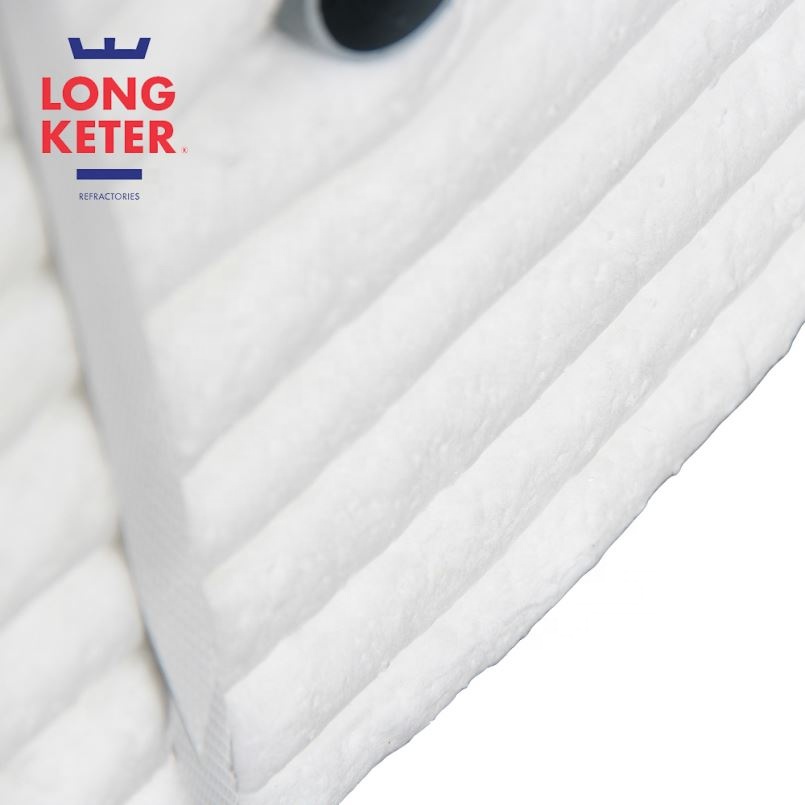
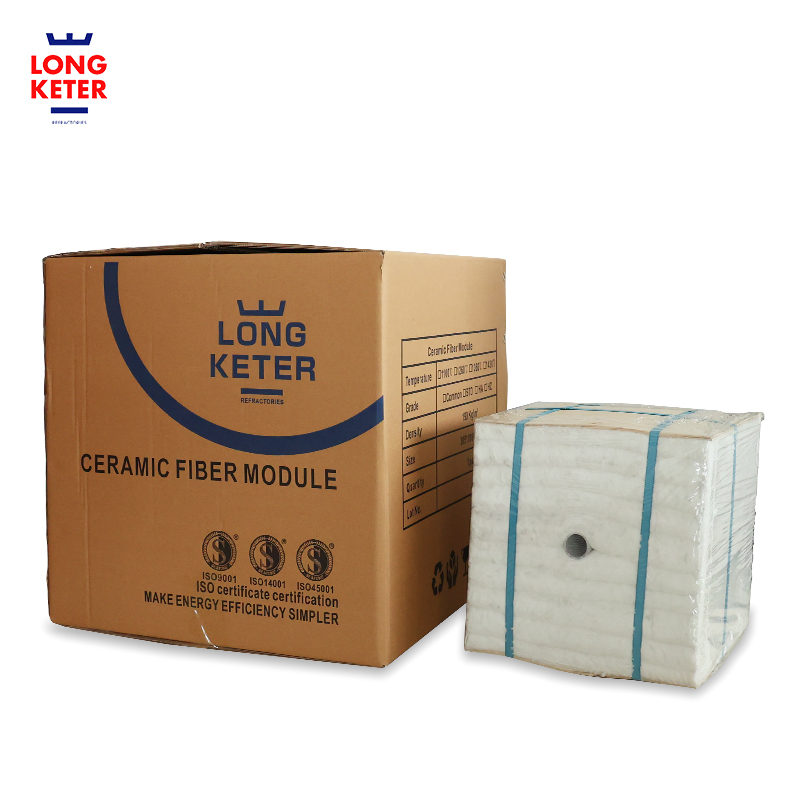
Compared with traditional refractory materials such as refractory bricks and castables, the prominent advantage of Long Keter's high-temperature ceramic fiber module furnace lining is first reflected in its extreme light weight. Relying on advanced fiber forming technology, the density of this module furnace lining is only 1/5 to 1/4 of that of traditional materials. Specific data shows that its weight is more than 70% lighter than that of light insulating brick linings, and even 75% to 80% lighter than that of light castable linings. The value brought by this lightweight feature is particularly significant: for large industrial furnaces, the substantial reduction in the weight of the furnace lining directly reduces the load on the load-bearing structures such as steel supports and furnace shells. It not only lowers the manufacturing material cost of the main equipment, but also reduces the risks of structural deformation and cracking, extending the overall service life of the industrial furnace by more than 30%, and fundamentally reducing the equipment maintenance and renovation costs for enterprises.
Low thermal conductivity and excellent thermal insulation performance are another core competitiveness of Long Keter's high-temperature ceramic fiber modules. Through precise laboratory testing, the thermal conductivity of the module at a high temperature of 1200℃ is only 0.15-0.20W/(m·K), which is much lower than 0.40W/(m·K) of traditional light refractory bricks. This feature enables the surface temperature of the furnace wall to be controlled within 60℃ during the operation of the industrial furnace, and the heat loss is reduced by more than 50% compared with the traditional furnace lining. The actual application data of a steel enterprise shows that after adopting Long Keter's ceramic fiber module furnace lining, the unit energy consumption of its continuous heating furnace has decreased from the original 120kg standard coal/ton of steel to 85kg standard coal/ton of steel, saving nearly 200,000 yuan in energy costs per month, and the energy-saving effect is extremely prominent.
The low heat capacity feature brings significant benefits to industrial furnaces operating intermittently. The heat capacity of a material is positively correlated with its weight, and the heat capacity of Long Keter's high-temperature ceramic fiber module is only 1/7 of that of light heat-resistant linings and light clay refractory bricks. This means that the heat absorbed by the furnace body during the heating stage is greatly reduced, and the heating rate is increased by 30% to 50% compared with the traditional furnace lining. Taking the trolley-type heat treatment furnace commonly used in the machinery manufacturing industry as an example, after adopting this module furnace lining, the time for the furnace body to rise from room temperature to 800℃ has been shortened from the original 2.5 hours to 1.2 hours. This not only improves production efficiency and reduces the turnover time of workpieces to be processed, but also further reduces ineffective energy consumption under the operation mode of frequent start-up and shutdown, reducing the comprehensive operating cost of the equipment by more than 40%.
In addition to the core advantages of energy saving and weight reduction, Long Keter's high-temperature ceramic fiber module also has good construction convenience and structural stability. The module adopts a pre-compressed forming design, which only needs to be fixed with special anchors on site. The construction period is 60% shorter than that of the traditional castable furnace lining, and there is no need for a long curing time, so it can be put into production quickly. At the same time, its excellent thermal shock resistance can effectively cope with the severe fluctuation of furnace temperature, avoid problems such as cracking and spalling of the furnace lining, and reduce the frequency of equipment shutdown for maintenance.
As an enterprise focusing on the R&D and application of industrial insulation materials, Long Keter has always been customer demand-oriented and continuously optimizes product performance. In the future, the company will also launch more targeted high-temperature ceramic fiber module solutions, covering higher temperature ranges and more complex working conditions, and continue to provide strong support for industrial enterprises in energy-saving transformation, cost reduction and efficiency improvement.